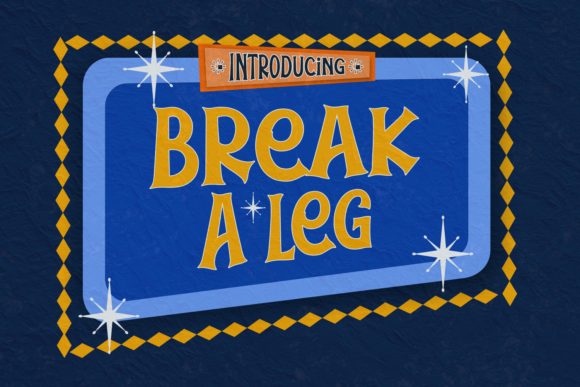
Break a Leg
What if your brand’s voice could wink, nod, and leave a lasting impression—all in a single word?
Break a Leg is more than just a playful idiom—it’s a whimsical, hand-drawn typeface that channels vintage charm with confident, bold strokes. Designed for designers who value authenticity and expressive nuance, this font bridges nostalgia and modern visual design without sacrificing legibility or versatility. Its slightly irregular baseline, organic ink weight shifts, and thoughtful imperfections make it ideal for projects where personality matters as much as precision.
Why Typography Shapes Perception
In graphic design, typography isn’t decorative—it’s functional storytelling. The right typeface reinforces tone, guides attention, and silently communicates values: warmth, authority, playfulness, or craftsmanship. Break a Leg excels in contexts demanding approachability and memorability—especially when paired thoughtfully with clean sans-serif companions or textured backgrounds. It’s not meant for body copy at small sizes, but shines where impact and intention intersect.
Where Break a Leg Adds Real Design Value
Used strategically, this font elevates creative assets across disciplines:
- Branding & logo design: Perfect for boutique studios, artisanal food brands, indie publishers, or lifestyle labels seeking a distinctive yet timeless mark.
- Social media graphics: Stands out in Instagram carousels, Pinterest pins, or TikTok overlays—its character cuts through algorithm-driven feeds.
- Packaging design: Adds tactile appeal to craft beer labels, greeting cards, or small-batch skincare—enhancing shelf presence and emotional resonance.
- Editorial & print design: Ideal for magazine headlines, book covers, or event posters where hierarchy and mood matter more than neutrality.
- Digital marketing & web design: Use sparingly in hero sections, CTA buttons, or testimonial highlights—always ensuring sufficient contrast and responsive scaling.
It’s equally effective in UI design for micro-interactions (think animated “Thank You” screens) or merchandising—t-shirts, tote bags, and enamel pins gain instant charm when rendered in Break a Leg. Just remember: restraint is key. Overuse dilutes its impact; intentional placement amplifies meaning.
Smart Integration Tips
Before dropping Break a Leg into your next project, consider these practical checks:
- Audience alignment: Does your target demographic respond to hand-crafted authenticity? Younger audiences and niche markets often embrace this aesthetic—but enterprise B2B may require subtler treatment.
- Color palette synergy: Pair with muted earth tones, deep indigos, or warm creams to honor its vintage roots—or contrast boldly with neon accents for unexpected energy.
- Scalability testing: Preview at multiple sizes and weights. While it holds up well on retina displays and large-format prints, avoid sub-24px usage in digital interfaces.
- Visual hierarchy support: Always pair with a highly legible secondary typeface (e.g., a neutral geometric sans) for supporting text—never compete for dominance.
- Brand system compatibility: Audit existing logos, icons, and imagery. Does Break a Leg harmonize—or does it clash with your current visual language?
Typography decisions influence user experience more than many realize. A headline set in Break a Leg can spark curiosity before the first sentence is read; a well-placed logo using its letterforms can evoke trust rooted in sincerity—not sterility. In an era saturated with algorithmically generated visuals, choosing a font with human rhythm signals care, craft, and clarity of purpose.
Whether you're refining a startup’s brand identity, refreshing social media templates, or designing a limited-edition product line, Break a Leg offers more than aesthetic flair—it delivers strategic differentiation. When paired with strong visual hierarchy, intentional color application, and consistent spacing, it transforms ordinary layouts into memorable experiences. Thoughtful design choices like this don’t just look good—they build recognition, foster connection, and quietly reinforce why your message deserves attention in the first place.