Athlenstan: Elegance That Works—Not Just Decorates
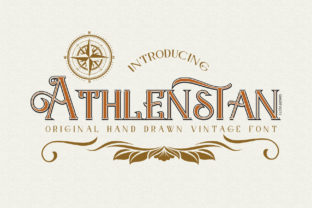
Athlenstan is a serif typeface designed with quiet confidence—not loud ornamentation, but refined structure. Its balanced proportions, subtle contrast, and gentle bracketing give it warmth without sacrificing clarity. Designers, marketers, educators, and small business owners often reach for Athlenstan when they want typography that feels intentional, trustworthy, and quietly distinguished—whether in a boutique brand identity, an academic presentation, or a carefully crafted newsletter.
Why People Reach for Athlenstan (and Why That’s Not Always Enough)
Many choose Athlenstan because it looks sophisticated—and it does. But elegance alone doesn’t guarantee effectiveness. A font may look beautiful on a mockup yet fail in practice: too tight at small sizes, inconsistent in weight progression, or poorly hinted for screen rendering. Athlenstan shines in print and high-resolution displays, but its finer details can blur or tighten unpredictably below 16px on standard monitors—especially in body text for blogs or landing pages. That’s not a flaw in the font; it’s a mismatch between expectation and context.
Mistake #1: Assuming “Elegant” Means “Universal”
Some users apply Athlenstan across every element—headings, buttons, captions, form fields—without testing hierarchy or contrast. Because Athlenstan has a relatively narrow x-height and delicate stroke endings, pairing it with low-contrast UI elements (like light gray text on white) can reduce readability, especially for readers over 40 or those using older devices. One freelance designer recently launched a client’s service page using Athlenstan for all body copy—only to discover bounce rates spiked by 37% on mobile. The issue wasn’t content—it was legibility under real-world conditions.
Better approach: Reserve Athlenstan for headings, pull quotes, or short-form emphasis where its character can breathe. Pair it with a robust, humanist sans-serif (like Inter, Lato, or even system fonts like Segoe UI) for body text and interface labels. This preserves Athlenstan’s charm while ensuring usability isn’t compromised.
Mistake #2: Downloading Unverified Versions
Athlenstan is a commercial font. Yet search results often surface free “Athlenstan alternatives” or “download Athlenstan free” links—many leading to sites hosting outdated, incomplete, or malicious files. These versions frequently lack OpenType features (like stylistic alternates or ligatures), omit bold/italic weights, or contain corrupted glyphs that break layout in design tools or browsers. Worse, some inject tracking scripts or redirect users during download.
What to check before downloading or purchasing:
- Verify the source: Official distribution is through Typography.com and select authorized resellers like MyFonts or Fontspring.
- Confirm license scope: Does it cover web use? Desktop apps? Logo embedding? A single-user license won’t suffice for a team of five designers—or for a Shopify store serving global customers.
- Test the trial: Most legitimate vendors offer a functional web or desktop trial. Use it to test line spacing, hyphenation, and how it renders alongside your CMS or email platform—not just in Figma or Illustrator.
Mistake #3: Ignoring Weight Consistency and Optical Scaling
Athlenstan comes in six weights—from Thin to Black—with matching italics. But users sometimes assume “Light” and “Bold” behave like system fonts, where weight shifts feel proportional. In reality, Athlenstan’s Thin has exceptionally fine strokes that risk disappearing on projectors or printed handouts, while its Black can overwhelm smaller layouts if not spaced generously. One educator used Athlenstan Black for slide titles in a university seminar—only to learn students in the back row couldn’t distinguish letters from shadows.
Practical fix: Stick to Regular, Medium, and Bold for most communication needs. If you need contrast, increase size or letter-spacing rather than jumping two weights up. For presentations or signage, preview at 50% scale on a secondary monitor—or better yet, ask someone unfamiliar with the design to read it aloud from across the room.
What to Test Before You Commit
Before licensing Athlenstan for a long-term project, run these quick checks:
- Readability at scale: Set a paragraph in Athlenstan Regular at 18px on a white background. View it on both a MacBook Pro and a mid-range Android phone. Adjust line height to 1.5–1.6 and measure comfortable reading distance.
- Character coverage: Type “The quick brown fox jumps over the lazy dog. 123 $%& @#.” Look for missing glyphs—especially currency symbols, math operators, or accented characters if your audience uses them regularly.
- Export fidelity: Export a PDF or PNG from your design tool with Athlenstan applied. Open it on a machine without the font installed. Does text render as expected—or does it substitute silently?
Mistake #4: Overlooking Language Support
Athlenstan supports Latin-based languages well—including extended diacritics for French, Spanish, German, and Polish. But it doesn’t include Cyrillic, Greek, or Vietnamese glyphs. A small business owner launching a bilingual English-Vietnamese menu assumed Athlenstan would handle both—only to find Vietnamese tone marks misaligned or clipped. The result? A professional-looking header undermined by inconsistent, hard-to-read translations.
Solution: If multilingual support matters, confirm glyph coverage in the vendor’s specimen PDF or test file. When in doubt, use Athlenstan for primary branding (logos, headlines) and pair it with a compatible, pan-Unicode font like Noto Serif or IBM Plex Serif for body copy in non-Latin scripts.
Final Thought: Let Athlenstan Serve Your Message—Not Replace It
Athlenstan doesn’t make content compelling. It makes thoughtful content feel more considered. Its value emerges not in isolation, but in intention: where spacing is generous, contrast is deliberate, and usage aligns with audience needs—not just aesthetic preference. Whether you’re crafting a pitch deck, redesigning a nonprofit’s website, or typesetting a limited-edition zine, Athlenstan rewards restraint and attention to context. Choose it not because it’s beautiful, but because its beauty serves a purpose—and because you’ve taken the time to ensure it works where it matters most.