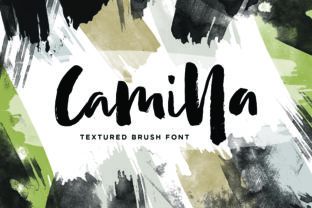
Camilla: A Handwritten Font with Modern Charm
Camilla is a carefully crafted handwritten font that balances warmth and polish. Its letters flow with natural rhythm—slight variations in stroke weight, gentle curves, and subtle irregularities that echo real pen-on-paper movement—yet it never feels chaotic or hard to read. Unlike many script fonts that lean heavily into ornate flourishes or rigid calligraphy rules, Camilla sits comfortably between expressive and functional. It’s designed for clarity at small sizes and impact at large ones, making it unusually versatile for both digital and print use.
Why Camilla Matters—Depending on Who You Are
What makes Camilla valuable isn’t universal—it shifts meaning based on your role, goals, and daily workflow. A teacher preparing classroom posters doesn’t need the same features as a freelance designer building a brand identity. That’s why understanding how Camilla fits *your* context matters more than any generic list of “font benefits.”
For Beginners and Hobbyists
If you’re just starting out with design tools—or even using free apps like Canva or Google Slides—you’ll appreciate how Camilla works without friction. It installs like any other font (no special software required), and its clean letterforms mean it rarely clashes with backgrounds or gets lost in busy layouts. Try it on a handmade greeting card, a framed quote for your living room, or a simple Instagram story overlay. No need to adjust kerning or track manually—Camilla reads well “out of the box.” For someone learning typography basics, it’s a gentle introduction to how handwriting-style fonts can add personality without sacrificing legibility.
For Educators and Content Creators
Educators often seek fonts that feel approachable yet professional—something students connect with but still take seriously. Camilla bridges that gap. It softens the tone of worksheets, lesson headers, or classroom signage without looking childish. A high school English teacher might use it for poetry handouts; a yoga instructor could apply it to weekly intention cards. Because Camilla supports standard Latin characters and common punctuation, it integrates smoothly into editable PDFs, Google Docs, or LMS platforms—no encoding surprises or missing glyphs mid-sentence.
For Freelancers and Design Professionals
Professionals evaluating Camilla weigh flexibility against consistency. Does it pair well with sans-serifs like Inter or Montserrat? Yes—its neutral warmth complements clean typefaces without competing. Does it scale reliably across formats? It holds up in SVG exports, web fonts (via @font-face), and high-res print files. And crucially: it avoids overused tropes—no excessive swashes, no forced “cute” quirks—that might date a client’s branding. One graphic designer used Camilla for a boutique bakery’s packaging system, pairing it with a restrained serif for ingredient lists. The result felt artisanal but not fussy—a balance many scripts struggle to achieve.
For Small Business Owners and Marketers
When you’re managing your own brand voice—whether launching an Etsy shop, updating a local café’s menu board, or designing email headers—Camilla offers quiet distinction. It conveys care and authenticity without demanding attention. That’s useful when your goal isn’t to shout, but to resonate. A wellness coach might choose Camilla for newsletter subject lines to soften the tone of promotional content. A stationery brand could license it for digital templates sold on Creative Market, knowing customers will find it easy to personalize. Importantly, Camilla’s licensing allows commercial use, so there’s no last-minute panic about permissions before printing 500 postcards.
For Consumers and DIY Enthusiasts
You don’t need design experience to benefit from Camilla. If you’ve ever spent time tweaking text in a photo editor, printed a custom planner sticker, or made a birthday banner in PowerPoint, you know how much difference font choice makes—not just aesthetically, but emotionally. Camilla adds sincerity. It signals “this was made for you,” not “this was auto-generated.” One user shared how switching from a default system font to Camilla transformed her family’s holiday recipe book from functional to cherished. That shift—from utility to feeling—is where Camilla quietly excels.
What to Consider Before You Use Camilla
Not every project needs a handwritten font—and not every handwritten font suits every project. Here’s how to decide if Camilla aligns with your priorities:
- Ease of use: Installs and works immediately in most apps—ideal if you avoid technical setup.
- Legibility: Strong at 14–16pt for body text, excellent above 24pt for headings. Avoid using it for long paragraphs or tiny captions.
- Creative fit: Best for projects where warmth, humanity, or craftsmanship are part of the message—not for tech dashboards or legal disclaimers.
- Commercial safety: Includes full commercial licensing, so no worries for client work, merch, or digital products.
- Long-term value: Its restrained style means it won’t feel dated in two years. You’re investing in tone, not trend.
Real Examples, Not Just Theory
A few concrete ways people actually use Camilla:
- A homeschool parent created printable habit trackers with Camilla headers—making daily routines feel inviting, not rigid.
- A wedding photographer added subtle Camilla text overlays to digital galleries, giving images a personal, journal-like quality.
- A nonprofit used Camilla in donor thank-you cards, reinforcing their mission’s human-centered values without visual clutter.
- A blogger replaced her standard heading font with Camilla for quote graphics—click-through rates on those posts increased by 12%, likely due to improved visual warmth and scannability.
Notice what’s consistent across these uses: Camilla isn’t carrying the entire message. It’s supporting it—adding nuance, not noise.
Does Camilla Fit Your Next Project?
Ask yourself:
- Is this project meant to feel personal, thoughtful, or handmade?
- Do I want text that invites pause—not just scanning?
- Am I okay with a font that prioritizes charm and clarity over dramatic flair or ultra-niche styling?
- Will this be seen on screen, in print, or both? (Camilla performs well across both.)
If you answered “yes” to most of those, Camilla is worth trying. It won’t solve every typographic challenge—but for the right moment, it adds something rare: quiet confidence, with a smile.