Kallita: Where Handwritten Charm Meets Modern Design
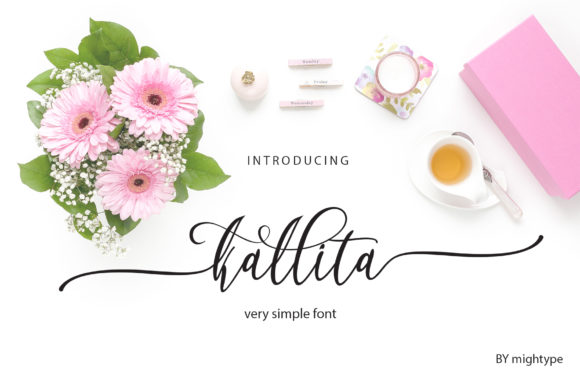
There’s something quietly powerful about typography that feels human—not perfect, not sterile, but alive with rhythm, breath, and intention. Kallita is one of those rare fonts that doesn’t just mimic handwriting—it embodies it. Designed as a modern calligraphy font, Kallita flows like ink on paper: subtle variations in stroke weight, gentle tapering, organic entry and exit strokes, and a natural tilt that echoes the way a hand moves across a page. It’s not a script font built for flourish alone; it’s crafted for authenticity, readability, and quiet sophistication.
What Makes Kallita Feel So Naturally Handwritten?
Kallita stands apart because it avoids the trap many script fonts fall into: over-decoration. Instead of relying on exaggerated swashes or forced elegance, Kallita leans into imperfection as intention. Its lowercase “a” has a soft, open bowl. The “g” features a graceful, looping tail—not too tight, not too loose. Even the uppercase letters carry a relaxed confidence, with slight irregularities in curve tension and baseline alignment that mirror real pen movement.
This isn’t accidental. Every glyph was drawn with pressure-sensitive tools, then refined to preserve the warmth of analog creation while ensuring digital clarity. The result? A font family that reads clearly at 14pt in body text—and still sings at 60pt on a wedding invitation or boutique storefront sign.
Key Characteristics That Define Kallita
- Natural stroke modulation: Thicker downstrokes and finer upstrokes replicate how a nib or brush responds to hand motion—no uniform lines here.
- Open letterforms: Generous counters and airy spacing prevent crowding, especially important in longer passages or small sizes.
- Subtle contextual alternates: Some OpenType features automatically swap glyphs based on letter pairs (like “fi” or “st”), adding nuance without manual intervention.
- Optimized for both print and screen: Hinting and spacing adjustments ensure crisp rendering on retina displays and clean ink coverage on letterpress or foil stamping.
Where Kallita Fits Into Real Creative Workflows
You won’t find Kallita dominating corporate dashboards or legal disclaimers—and that’s by design. Its strength lies where personality matters most: branding for lifestyle businesses, editorial storytelling, artisan packaging, and personal expression.
Consider a ceramicist launching an online shop. Using Kallita for product names (“Stoneware Mug,” “Glazed Vase Set”) adds tactile warmth that contrasts beautifully with clean sans-serif body text. Or imagine a wellness coach designing a printable habit tracker—the font’s gentle curves soften the structure of grids and checkboxes, making routines feel inviting rather than rigid.
In editorial design, Kallita shines in pull quotes, chapter headings, or masthead treatments. A food magazine might use it for recipe titles (“Honey-Roasted Carrots with Thyme”)—evoking the care behind slow-cooked meals. A literary journal could set author bios in Kallita to suggest intimacy and voice before the first sentence is read.
Practical Benefits You’ll Notice Right Away
Designers often ask: “Is this font *actually usable*—or just pretty?” With Kallita, the answer is emphatically yes. Here’s why:
- Fast visual hierarchy: Because Kallita carries inherent emphasis (through contrast and flow), you don’t need bold variants or all-caps treatments to signal importance. A single line in Kallita stands out naturally against neutral typefaces.
- Low cognitive load for readers: Unlike highly stylized scripts, Kallita’s letterforms remain legible even when used in moderate-length headlines or short paragraphs. Test it yourself: try reading “Welcome to our seasonal collection” set in Kallita at 18pt—it lands with clarity, not confusion.
- Seamless pairing potential: Kallita harmonizes effortlessly with contemporary sans-serifs (like Inter, Poppins, or Manrope) and even some low-contrast serifs (such as Lora or Cormorant Garamond). Its warmth balances cool geometry; its fluidity grounds structured layouts.
When to Reach for Kallita—And When to Pause
Kallita excels in contexts where tone, trust, and humanity are part of the message. Think:
- Branding for yoga studios, apothecaries, handmade goods, or independent bookshops
- Invitations, greeting cards, and personalized stationery
- Blog headers, podcast cover art, and social media quote graphics
- Product labels for skincare, coffee roasters, or small-batch chocolate makers
It’s less ideal for:
- UI interfaces requiring high scannability (e.g., navigation menus or form labels)
- Legal documents or technical manuals where neutrality and precision dominate
- Large blocks of body copy—its charm works best in measured doses
That said, designers increasingly use Kallita for micro-copy touches: a subtle “hand-picked” tagline beneath a product image, a handwritten-style “thank you” in email footers, or a delicate “est. 2021” under a logo. These moments add texture without overwhelming.
Choosing Kallita: What Designers & Brands Actually Consider
Before licensing or downloading Kallita, thoughtful users weigh more than aesthetics. They ask practical questions:
- Licensing scope: Does the license cover web use, desktop apps, and merchandise? Kallita typically offers flexible tiers—including options for unlimited projects and extended commercial use—so check the vendor’s terms before committing.
- Language support: Standard Latin characters are fully covered, and many versions include extended Latin (accents for French, Spanish, German), plus basic punctuation and numerals. If your project targets multilingual audiences, verify glyph coverage early.
- File format compatibility: Kallita is usually delivered as OTF and WOFF2 files—ideal for both design software (Adobe apps, Figma, Affinity) and modern web development. No legacy TTF headaches here.
- Performance impact: At ~120KB for the full variable-weight version, Kallita loads quickly—even on mobile. Pair it with font-display: swap in CSS to avoid invisible text during load.
Getting Started With Kallita—No Calligraphy Skills Required
One of the most liberating things about Kallita is that it requires zero penmanship practice. You don’t need to learn ligatures or master dip pens to harness its appeal. In fact, its greatest value emerges when used *intentionally but simply*: a single headline, a signature line, a logo lockup.
Try this quick workflow:
- Open your design tool and type a short phrase—“Made with care,” “Slow & intentional,” “Your story begins here.”
- Set it in Kallita at 24–36pt. Adjust tracking slightly (+10 to +20) to let the letters breathe.
- Place it over a muted background—cream, soft grey, or even textured paper. Watch how it anchors the composition without shouting.
You’ll notice immediately how Kallita shifts the mood—not louder, but deeper. It invites pause. It suggests care was taken—not just in the final output, but in the thinking behind it.
Kallita Isn’t Just a Font—It’s a Design Mindset
In an age of algorithmic feeds and templated layouts, choosing Kallita signals something subtle but significant: that craft matters. That people respond to cues of human presence—even in type. It’s not about nostalgia for ink and parchment. It’s about honoring the fact that communication, at its best, feels personal.
Whether you’re building a brand from scratch, refining an existing identity, or simply searching for a typeface that feels like a quiet exhale amid visual noise—Kallita offers consistency without rigidity, elegance without pretense, and warmth without cliché.
Its charm isn’t loud. It doesn’t demand attention. But once you’ve seen it—used it—you start noticing where handwriting-style type belongs: not everywhere, but exactly where it’s needed most.