Plotterfreak: A Playful, Spooky Font for Real Projects
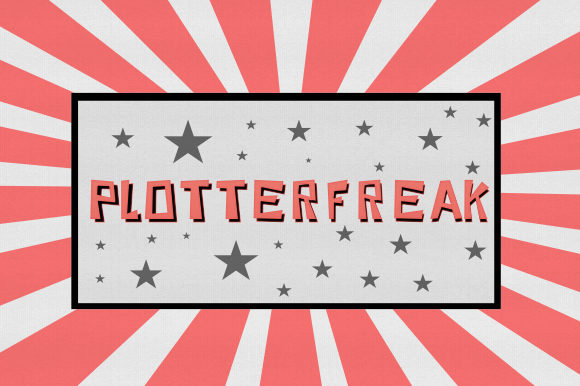
Plotterfreak is a cartoony, slightly off-kilter typeface with exaggerated strokes, uneven baselines, and expressive quirks—like a hand-drawn font that’s been fed espresso and left to wander. It’s not just “cute” or “scary.” It’s both—and neither. Its personality shifts depending on how you use it: pair it with dripping shadows and jagged edges for Halloween posters, or set it clean and bright over pastel backgrounds for a playful bakery menu. That flexibility makes it more than a novelty—it’s a tool with real design utility.
Why This Font Fits More Than Just October
At first glance, Plotterfreak looks like it belongs on a haunted house sign or a comic book cover. But its charm lies in contrast. When used deliberately—not as filler—it adds voice, energy, and memorability. A teacher might choose it for a classroom “Science Spooktacular” bulletin board to spark curiosity in reluctant readers. A small-batch candle maker could use it for a limited-edition “Midnight Moss” label, giving the product instant character without needing custom illustration. Even a nonprofit launching a youth literacy campaign might lean into its friendly weirdness to signal that learning doesn’t have to be stiff or serious.
For Beginners: Low Risk, High Personality
If you’re just starting with typography, Plotterfreak is forgiving. You don’t need advanced layout skills to get impact from it. Try using it for one headline per page—like an event title, workshop name, or social media graphic caption—while keeping body text in a simple sans-serif (e.g., Open Sans or Inter). That contrast does most of the work. No need to adjust kerning or track unless you want to; even default spacing reads clearly at larger sizes. And because it’s designed with strong visual rhythm, it holds up well on phone screens and printed flyers alike.
For Educators & Content Creators
Educators often juggle tight budgets and time constraints—but also need materials that hold attention. Plotterfreak helps turn routine handouts into something students actually look at. Imagine a vocabulary worksheet where each “spooky word” (e.g., *eerie*, *lurk*, *gloom*) appears in Plotterfreak, while definitions stay in a legible, accessible font. That subtle visual cue reinforces meaning without adding cognitive load. Similarly, podcasters or YouTubers creating thumbnail art can use it for episode titles (“The Case of the Vanishing Homework”) to stand out in crowded feeds—especially when paired with bold color blocking.
For Small Business Owners & Freelancers
When branding feels expensive or overwhelming, a distinctive font like Plotterfreak offers quick wins. A local comic shop owner might use it across Instagram Stories, receipt tape, and window decals—not as full branding, but as a consistent accent that says, “We love this world, and we don’t take ourselves too seriously.” Freelance designers sometimes hesitate to recommend display fonts to clients, fearing they’ll date quickly. But Plotterfreak avoids trend traps: its cartoon roots are timeless, not TikTok-fleeting. It scales well across formats—from embroidered patches to website headers—as long as it’s applied with intention, not excess.
What to Consider Before You Use It
Like any expressive typeface, Plotterfreak works best when matched to your goal—not your mood. Ask yourself:
- Is legibility critical? Avoid it for long paragraphs, fine print, or accessibility-sensitive contexts (e.g., medical instructions or legal disclaimers).
- Does your audience expect consistency? If you’re designing for a university department or corporate HR team, Plotterfreak may clash with established tone—even if it’s technically allowed.
- How much control do you need? Some versions include alternate characters (swashes, ligatures) that add flair—but only if your software supports OpenType features. Basic platforms like Canva handle it fine for headlines; Adobe Illustrator or Affinity Designer unlock more nuance.
Real-World Pairings That Work
Plotterfreak thrives in contrast. Here’s how different users combine it successfully:
- A children’s illustrator uses it for book title covers, then switches to a rounded, highly legible font (like Quicksand) for chapter headings—keeping energy high but readability intact.
- A food truck operator prints it on vinyl banners above their order window (“ZOMBIE TACOS — NO BRAINS REQUIRED”), then uses a clean mono-spaced font for the menu items underneath.
- An indie game dev applies Plotterfreak to achievement names (“Ghost Mode Activated”, “Shadow Skip Unlocked”) in their UI—adding humor and theme without interfering with gameplay clarity.
Where It Fits—and Where It Doesn’t
Plotterfreak isn’t built for neutrality. It won’t blend into the background, and it shouldn’t. That means it’s rarely the right pick for annual reports, academic journals, or government forms—contexts where authority and quiet confidence matter more than charm. But in spaces where emotion, identity, or invitation matters—classrooms, community events, creative portfolios, product packaging—it adds dimension that generic fonts simply can’t replicate.
Its value isn’t in being “unique for uniqueness’ sake.” It’s in offering a shortcut to tone. You don’t need to write clever copy or commission custom art to signal playfulness or intrigue. One well-placed word in Plotterfreak can do that heavy lifting—freeing you to focus on substance, strategy, or storytelling.
Getting Started Is Simple
No complex licensing puzzles here. Most reputable sources offer Plotterfreak with clear personal and commercial use terms. If you’re using it for client work, double-check the license covers derivative products (e.g., selling merch with the font on it)—but standard web or print usage rarely requires extra steps. And unlike some display fonts, it renders reliably across browsers and devices, so what you see in design software is close to what your audience sees.
Whether you're sketching a flyer before breakfast, building a Shopify banner at midnight, or helping students design their first zine, Plotterfreak meets you where you are—not as a “must-have,” but as a thoughtful option that earns its place.