Situgintu: A Bold Handwritten Font for Standout Design
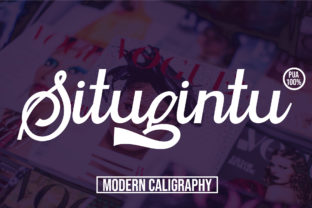
Situgintu isn’t just another handwritten font—it’s a deliberate, expressive tool built for clarity and impact. With its confident strokes, intentional contrast, and rhythmic flow, Situgintu bridges the warmth of human handwriting with the precision needed for professional design. It doesn’t try to mimic casual scribbles; instead, it offers control, consistency, and character—making it ideal when authenticity must also be legible, scalable, and on-brand.
What Makes Situgintu Distinctive
At first glance, Situgintu feels alive—its letterforms carry weight and motion without sacrificing readability. Each glyph is carefully balanced: thick downstrokes anchor the text, while lighter upstrokes introduce energy and movement. Unlike many script fonts that blur at small sizes or lose personality in all-caps settings, Situgintu includes smart OpenType features—contextual alternates, ligatures, and stylistic sets—that adapt naturally to word shape and spacing.
It’s also designed with real-world use in mind. The lowercase ‘g’, ‘y’, and ‘Q’ have clean, uncluttered exits—critical for tight line spacing in posters or mobile interfaces. Uppercase letters retain strong presence without overwhelming supporting text. And because it’s optimized for both screen and print, you’ll get crisp rendering whether it’s on an Instagram story, a classroom handout, or a boutique product label.
Creative Applications That Work—Not Just Look Good
Designers often reach for handwritten fonts hoping to evoke “authenticity”—but authenticity needs context. Situgintu shines where intention meets execution. Here are grounded ways people are using it right now:
- Branding for service-based businesses: A local yoga studio uses Situgintu for its logo and class schedule headers—soft enough to feel welcoming, bold enough to hold attention beside photography. Paired with a neutral sans-serif body font, it communicates calm authority—not whimsy.
- Educational materials: Teachers embed Situgintu in worksheet titles and learning objectives. Its clear letterforms reduce cognitive load for students while still feeling approachable—especially helpful for neurodiverse learners who benefit from consistent, high-contrast typography.
- Digital course sales pages: Entrepreneurs use Situgintu for headline variants (“What You’ll Master” or “Your First Step Starts Here”)—not as full-body text, but as strategic emphasis points that guide the eye without competing with core messaging.
- Print-on-demand products: Artists and hobbyists apply Situgintu to greeting cards, art prints, and tote bags. Because its rhythm reads well at scale—and avoids overly decorative flourishes—it translates cleanly across fabric, paper, and enamel pins.
Adapting Situgintu Across Audiences and Platforms
One size doesn’t fit all—but Situgintu scales thoughtfully. For marketers launching a campaign, use its stylistic sets to create subtle variations: switch to a tighter alternate for social bios (where space is limited), or activate swash capitals only in hero banners where impact matters most. For educators preparing slides, limit Situgintu to slide titles and section dividers—never body copy—to maintain accessibility and focus.
Bloggers and content creators find it especially useful for visual storytelling. Try setting pull quotes in Situgintu over full-bleed photos—its contrast holds up against busy backgrounds better than delicate scripts. On email newsletters, use it sparingly in subject lines previewed on mobile devices: test how it renders at 16–18px before sending. Small tweaks like tracking adjustments (+20–40) improve legibility in UI contexts without losing its voice.
Freelancers building brand guidelines for clients appreciate Situgintu’s built-in pairing logic. Its x-height aligns smoothly with common sans-serifs like Inter, Poppins, or Montserrat—no manual baseline tweaking required. That means faster mockups, fewer revisions, and more time spent refining strategy instead of kerning.
Staying Clear, Consistent, and Audience-Focused
Handwritten fonts can easily tip into illegibility or visual noise. With Situgintu, restraint is your strongest creative choice. Ask yourself: *Does this usage serve the reader—or just look interesting?* If you’re designing a restaurant menu, Situgintu works beautifully for dish names—but avoid using it for prices or allergen notes. In presentations, reserve it for slide titles and key takeaways—not bullet points or citations.
Consistency starts with limits. Define one primary use case (e.g., “Situgintu = Headlines only”) and stick to it across touchpoints. That builds recognition. If you later expand its role—say, adding it to email signatures or social avatars—do so intentionally, not incrementally. Your audience will sense the coherence.
Originality comes from application, not decoration. Instead of layering effects (drop shadows, outlines, gradients), explore how Situgintu interacts with whitespace, color contrast, and layout rhythm. A centered Situgintu headline over generous margin space feels bolder than the same text crammed with embellishment. Let the font’s inherent strength do the work.
Getting Started—Practical Next Steps
You don’t need a design degree to use Situgintu well. Start simple:
- Install and test: Load it into your design app (Figma, Adobe Creative Cloud, Canva Pro) and type out your most common headline phrases. Notice how words like “Create,” “Together,” and “Now” flow—then adjust tracking or choose alternates if certain combinations feel cramped.
- Build a mini system: Pick one complementary sans-serif (try Inter or Manrope for free, or Montserrat for paid projects) and define clear hierarchy rules: Situgintu for H1, sans-serif for H2–H4 and body. Stick to that for three projects before expanding.
- Test in context: Drop your design into real environments—preview a Canva banner on your phone, print a 4×6 test card, or paste a Figma prototype link into WhatsApp. Does the font still read clearly under those conditions?
- Document decisions: Note why you chose Situgintu for a specific project. Was it tone? Legibility at scale? Client alignment? Capturing that reasoning helps future iterations stay purposeful—not habitual.
Situgintu rewards thoughtful use. It won’t fix weak messaging or inconsistent branding—but in the hands of someone who understands their audience and goals, it becomes a quiet amplifier. It adds humanity without sacrificing professionalism, distinction without distraction, and warmth without vagueness. That balance is rare. And it’s why designers, educators, and small business owners keep returning to it—not as a trend, but as a reliable part of their toolkit.