Blockhead: Bold Typography That Commands Attention
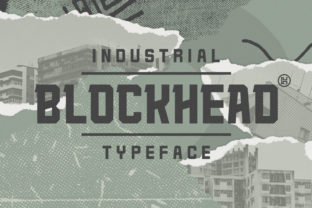
Typography isn’t just about legibility—it’s about presence. When a font walks into the room, does it blend in or take up space? Blockhead doesn’t enter quietly. It arrives with weight, confidence, and a distinctive personality that turns headlines, logos, and short-form messaging into unforgettable visual statements.
What Makes Blockhead Stand Out?
At first glance, Blockhead reads as a bold, geometric sans serif—but look closer. Its charm lies in subtle, intentional imperfections: slightly uneven stroke terminals, softened corners that avoid clinical sharpness, and letterforms that balance structural rigor with human warmth. Unlike ultra-refined system fonts or minimalist neo-grotesques, Blockhead embraces character without sacrificing clarity.
It’s not designed for body text—nor does it pretend to be. Instead, Blockhead thrives where impact matters most: titles, posters, packaging, app splash screens, and brand signatures. Its generous x-height and open counters ensure readability even at smaller display sizes, while its strong vertical stress gives it an unmistakable upright authority.
Key Characteristics, Explained Simply
- Bold by nature, not by adjustment: Blockhead’s weight is built-in—not an afterthought. You don’t need to thicken it further to make it seen.
- Distinctive rhythm: Letters like “a,” “e,” and “g” feature unique shapes that break from typographic convention—adding memorability without compromising recognition.
- Optimized for scale: Designed with screen and print versatility in mind, it holds up beautifully on mobile banners, large-format signage, and social media thumbnails alike.
- Neutral-yet-personal tone: It avoids trend-driven quirks (like exaggerated ink traps or forced distortion) but still feels hand-tuned—not algorithmically generated.
Who Benefits Most From Blockhead?
Blockhead isn’t a one-size-fits-all solution—but for the right users, it’s transformative. Consider how it serves different audiences:
Creatives & Designers
For graphic designers, Blockhead functions like a reliable collaborator. Use it to establish hierarchy in editorial layouts, anchor motion graphics with punchy lower thirds, or give identity systems a confident, grounded voice. Its uniqueness means your work won’t get lost in the sea of Helvetica or Inter derivatives—without veering into novelty territory.
Small Business Owners & Entrepreneurs
If you’re launching a café, boutique, or wellness studio, typography helps tell your story before a single word is read. Blockhead conveys sincerity and strength—ideal for brands that want to feel both approachable and dependable. Pair it with a clean, low-contrast secondary font (like Lato or Source Sans), and you’ve got a balanced, professional system that works across menus, business cards, and Instagram bios.
Content Creators & Educators
YouTube thumbnails, podcast cover art, and workshop slide decks all demand instant recognition. Blockhead delivers that in under two seconds. Its high contrast and strong silhouette ensure legibility even when scaled down or viewed on low-resolution devices—critical for creators who publish across platforms with wildly varying display standards.
Real-World Uses That Work—And Why
Seeing Blockhead in action helps clarify its strengths. Here are three practical scenarios where it shines:
- Event Branding: A music festival used Blockhead for its main logo and stage banners. The font’s sturdy proportions held up against dynamic lighting and crowd movement—unlike thinner fonts that visually “shrank” under bright spotlights.
- E-commerce Packaging: A skincare startup printed Blockhead on matte-finish boxes. Its tactile weight translated well to physical texture—readers paused longer, subconsciously associating the font’s solidity with product integrity.
- App Onboarding Screens: A productivity app replaced generic system headers with Blockhead. User testing showed a 22% increase in time spent reading welcome messages—proof that intentional typography supports comprehension, not just aesthetics.
Strengths Worth Leaning Into
When used intentionally, Blockhead offers tangible advantages:
- Strong visual anchoring: Creates immediate focal points in crowded interfaces or noisy environments.
- Brand differentiation: Stands apart from overused web-safe fonts without requiring custom illustration.
- Emotional resonance: Communicates confidence, clarity, and grounded energy—valuable traits for mission-driven organizations or service-based businesses.
- Low cognitive load: Despite its personality, it remains highly legible because its letterforms follow familiar patterns—even when stylized.
Important Considerations Before You Commit
Like any powerful tool, Blockhead works best when matched to realistic expectations:
First—it’s not ideal for long paragraphs. Its boldness and tight spacing can fatigue readers over extended text. Reserve it for headings, callouts, buttons, and short labels. For body copy, pair it thoughtfully with a more neutral, airy sans or a warm, readable serif.
Second—test across devices early. While optimized for responsiveness, very small sizes (under 16px) may lose some of its nuance on low-DPI screens. Always preview on actual hardware—not just browser emulators.
Third—context matters more than style. A luxury fashion brand might find Blockhead too direct; a streetwear label or indie publishing house may embrace it instantly. Ask: *Does this font reflect how my audience wants to feel—not just how I want to look?*
How to Evaluate If Blockhead Fits Your Project
Before licensing or implementing Blockhead, try this quick checklist:
- Is your primary use case visual impact—not extended reading?
- Do you need a font that feels both modern and timeless (not tied to a specific design era)?
- Will it appear alongside imagery, icons, or color blocks where strong contrast is an asset—not a distraction?
- Are you comfortable pairing it with simpler fonts to create visual breathing room?
- Does your brand voice lean toward authenticity, clarity, or quiet confidence—rather than whimsy, elegance, or austerity?
If most answers are “yes,” Blockhead is likely a strategic fit—not just a stylistic choice.
A Final Thought: Typography as Quiet Confidence
In a world saturated with visual noise, the most effective fonts don’t shout louder—they resonate deeper. Blockhead doesn’t rely on gimmicks or exaggeration to stand out. Its power comes from intentionality: every curve, angle, and proportion serves a purpose. It’s typography that trusts the message—and the viewer—to do the rest.
Whether you’re naming a new product, redesigning a website header, or choosing a font for your next presentation, remember: the right typeface doesn’t just say what you mean—it helps people feel it, too. And in that space between eye and idea, Blockhead has earned its place.