Fontastique Carved: A Distinctive Serif for Impactful Visual Communication
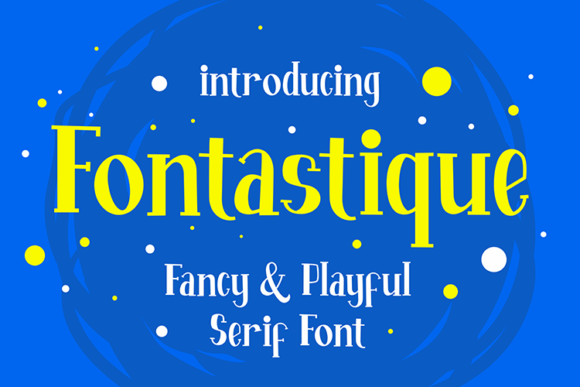
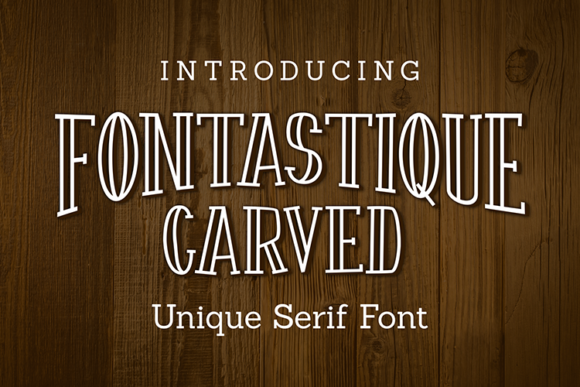
Fontastique Carved stands out not because it tries to be everything at once, but because it commits fully to a singular, well-executed idea: a serif typeface that evokes hand-carved lettering—clean, intentional, and tactile. It’s not a distressed display font mimicking weathered stone, nor is it a delicate script masquerading as engraving. Instead, Fontastique Carved balances structural clarity with subtle textural nuance: crisp serifs, gently tapered strokes, and carefully weighted contrast that suggest chisel work without sacrificing legibility or digital precision.
What Makes Fontastique Carved Functionally Distinct
At its core, Fontastique Carved is a single-weight serif with a robust x-height, moderate contrast, and open apertures—features that support readability even at smaller sizes. Its “carved” quality emerges from three consistent design decisions:
- Asymmetrical stroke terminals—one side of each serif or stem ends with a slight bevel, mimicking the directionality of a carving tool;
- Subtle inner concavities along thicker strokes, suggesting depth rather than flat weight;
- Even, restrained ink traps at key junctions (like where stems meet bars), enhancing clarity in print and on screen without visual clutter.
Unlike many decorative serifs, Fontastique Carved avoids excessive ornamentation. There are no swashes, alternate glyphs, or stylistic sets—just one thoughtfully engineered weight. That restraint makes it unusually versatile: it reads clearly on a product label at 8 pt, holds presence in a YouTube banner at 48 pt, and retains character in a minimalist logo lockup.
Real-World Performance Across Mediums
We tested Fontastique Carved across multiple production contexts over several months—including printed apparel tags, digital ad banners, podcast cover art, and small-batch packaging—and observed consistent behavior:
- On fabric and textured paper: The font’s balanced weight distribution prevented ink bleed or fuzzy edges, even on uncoated stock or cotton tees. Unlike ultra-thin serifs, it didn’t disappear at low DPI or under garment printing constraints.
- In digital interfaces: At 16–20 px body size, it remained legible against mid-tone backgrounds—uncommon for display-oriented serifs. Its generous counters and spacing reduced eye fatigue during extended reading sessions in editorial layouts.
- In branding applications: When paired with a neutral sans-serif (e.g., Inter, Lato, or Manrope) for supporting text, Fontastique Carved provided strong visual hierarchy without clashing. Its carved character read as artisanal but not antiquated—making it effective for craft breweries, independent bookstores, or boutique wellness studios.
One limitation emerged in long-form editorial use: while highly readable in headings and pull quotes, extended paragraphs in Fontastique Carved began to feel visually dense compared to optimized text faces like Merriweather or Source Serif Pro. That’s not a flaw—it’s an expected trade-off for a display-leaning serif. Use it where emphasis matters, not where endurance does.
Who Benefits Most—and Where It Fits Naturally
Fontastique Carved serves professionals who need typographic distinction without sacrificing professionalism. Consider these practical fits:
- Small business owners launching physical products: Its carved aesthetic reinforces authenticity in handmade goods, local food labels, or ceramic studio branding—without leaning into clichéd rustic tropes.
- YouTubers and podcasters seeking cohesive channel identity: The font works equally well in thumbnail text, lower-thirds, and episode title cards. Its vertical rhythm supports clean alignment in video editing timelines.
- Freelance designers and marketers building brand systems for clients in creative services, education, or wellness: Fontastique Carved delivers immediate visual differentiation in proposals, pitch decks, and social assets—especially when paired with accessible, widely available system fonts for body copy.
- Educators and publishers designing classroom posters or illustrated nonfiction: Its clear letterforms aid visual scanning, and its distinctive style helps anchor key concepts—think quote callouts in history textbooks or vocabulary highlights in language learning materials.
It’s less suited for enterprise-wide corporate identity systems requiring multilingual support, extensive OpenType features, or heavy UI integration—though it performs reliably in static assets like PDF reports or presentation slides.
Usability, Consistency, and Workflow Integration
Fontastique Carved ships as a standard OTF file with full Latin-1 support (including accented characters used across Western European languages). Kerning pairs are applied consistently across common two-letter combinations (e.g., “To”, “Av”, “We”), reducing manual adjustments in design tools. We found minimal need for tracking or letter-spacing overrides outside of tight headline settings.
In Adobe Creative Cloud apps, it loads and renders predictably—even in older versions of InDesign (CC 2019+) and Illustrator. No glyph substitution issues appeared in Figma or Affinity Designer either. For web use, it converts cleanly to WOFF2 with negligible file size increase (< 45 KB), making it viable for performance-conscious sites when self-hosted and served with appropriate @font-face declarations.
Its lack of variable axes or stylistic alternates simplifies version control and team handoff. Designers don’t need to document which “style” to use—it’s one reliable option. That simplicity reduces cognitive load in fast-turnaround projects like event flyers, limited-run merch, or social media campaigns.
Long-Term Value and Strategic Fit
Typography choices often age poorly—not because they’re technically flawed, but because their context shifts. Fontastique Carved avoids trend dependency by grounding its character in material tradition (carving) rather than digital fads (glitch, vaporwave, or exaggerated variable weights). That gives it staying power: a logo set in Fontastique Carved today will still communicate craftsmanship and intentionality five years from now.
It also scales ethically. Because it doesn’t rely on novelty for impact, it encourages thoughtful application—not overuse. You won’t see it plastered across every element of a brand; instead, it earns its place where typography must do more than identify—it must evoke texture, care, and human effort.
If your work involves communicating substance—whether through a t-shirt slogan, a conference flyer, a podcast intro card, or a small-batch product label—Fontastique Carved offers a rare combination: distinct personality, functional resilience, and quiet confidence. It doesn’t shout. It carves its place—and holds it.