Giannis Rising
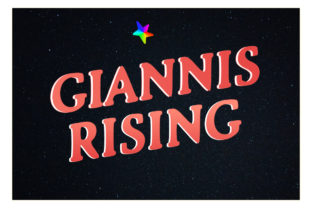
Giannis Rising isn’t just another serif font—it’s a confident, grounded, and quietly commanding typeface that feels both timeless and freshly relevant. Designed with intention, it’s an all-caps casual serif that balances warmth with presence. Its two styles—regular and italic—aren’t just variations; they’re complementary voices you can use to build hierarchy, rhythm, and personality without switching fonts.
Where Giannis Rising Fits Naturally (and Why It Stands Out)
Think about the last time you saw a book cover that made you pause before even reading the title. Or a local café’s hand-painted menu board that felt inviting but never childish. Or a boutique clothing label whose logo looked like it belonged on both a vintage tag and a modern Instagram story. That’s where Giannis Rising shines—not as a background player, but as a quiet anchor that gives design authenticity and clarity.
Unlike tightly spaced, ultra-refined serifs meant for fine print or editorial layouts, Giannis Rising has open counters, relaxed letter spacing, and subtle irregularities that echo hand-drawn confidence. It’s not “perfect” in a sterile way—and that’s its strength. It works because it feels human, not algorithmic.
Branding for Small Businesses and Independent Creators
If you run a ceramic studio, a specialty coffee roaster, or a freelance illustration practice, your brand voice likely leans into craft, care, and individuality. Giannis Rising delivers that tone instantly. Use the regular style for your logo or shop signage—it reads clearly at a distance and holds up beautifully on enamel pins or woven labels. Switch to the italic for secondary text like taglines (“Hand-thrown in Portland” or “Roasted weekly”) to imply movement and intention without sacrificing cohesion.
Film & Literary Projects
Movie posters, indie album art, and novel covers benefit from fonts that suggest mood without spelling it out. Giannis Rising’s upright posture and gentle contrast evoke mid-century poster design—but without feeling retro or costumed. Try it for a thriller’s title treatment: large, centered, slightly tracked-out. Pair it with a clean sans-serif for body text, and the contrast feels intentional, not accidental. For a memoir or poetry collection, its italic style adds lyrical weight to chapter titles or epigraphs—like handwriting with backbone.
Event Design & Local Culture
Community festivals, gallery openings, farmers’ markets—these thrive on approachability and local character. Giannis Rising avoids the coldness of corporate fonts and the overused quirkiness of many display fonts. Printed on recycled paper banners or screen-printed tote bags, it feels substantial but never stiff. One designer used it across a summer concert series: regular for band names, italic for dates and venues. Attendees told them the lineup “felt curated, not crowded”—a testament to how typography shapes perception before a single word is read.
Who Benefits Most—and How
- Graphic designers appreciate its versatility: it bridges branding and editorial needs without requiring font stacking or heavy kerning adjustments.
- Small business owners love that it scales well—from tiny product tags to wall-sized murals—without losing legibility or charm.
- Self-publishing authors find it refreshingly distinct from overused serif options like Playfair or Cormorant, helping their book stand out on crowded online thumbnails.
- Marketing teams at creative agencies use it to unify campaign assets: same font across social graphics, email headers, and physical promo items—no need to hunt for “matching” alternatives.
What to Keep in Mind Before You Use It
Giannis Rising is intentionally all-caps. That means it’s not built for long paragraphs or interface text. Don’t try to force it into body copy, navigation menus, or legal disclaimers—it wasn’t designed for that job, and trying will dilute its impact. Its strength lies in emphasis, identity, and atmosphere—not utility.
Also, while it’s highly legible at larger sizes, very tight tracking or small-scale applications (under 24pt in digital, under 36pt in print) can blur its friendly openness. Give it room to breathe. A little extra letter-spacing often enhances its natural rhythm rather than fights it.
And because it’s a casual serif—not a high-contrast Didone or rigid slab—it won’t project authority in contexts that demand formality. Think boardroom presentations, official government documents, or luxury watch packaging where precision and polish are non-negotiable. In those cases, Giannis Rising might feel too relaxed, too warm. That’s not a flaw—it’s a fit issue. Knowing when not to use it is just as valuable as knowing when to reach for it.
Pairing It Well (Without Overthinking)
You don’t need a font pairing toolkit to make Giannis Rising work. In fact, its simplicity makes pairing easier, not harder. Try it with:
- A neutral, moderately weighted sans-serif (like Inter, Poppins, or even Helvetica Neue) for supporting text—clean contrast without competition.
- A modest, low-contrast serif (think Lora or Merriweather) if you want tonal harmony instead of contrast—ideal for editorial projects where both headline and body should feel “of a piece.”
- No second font at all—just smart sizing, spacing, and color. Many effective posters and logos use Giannis Rising solo, letting its shape and weight carry the message.
One common misstep? Over-complementing. Adding a script font or decorative element alongside Giannis Rising can undermine its quiet confidence. Let it lead. If your concept needs flourish or motion, lean into the italic style first—before reaching for another typeface.
Why It Feels Like a Tool, Not a Trend
Trends come and go—remember the rush toward ultra-thin serifs or exaggerated variable fonts? Giannis Rising sidesteps that cycle by focusing on what lasts: readability, adaptability, and emotional resonance. It doesn’t shout. It settles in. It supports ideas instead of overshadowing them.
That’s why photographers use it on limited-edition print sleeves, why educators choose it for workshop banners, and why podcast hosts apply it to episode title cards—it communicates seriousness without stiffness, creativity without clutter. It’s the kind of font you forget you’re looking at… until you realize how much it’s helping your message land.
If you’ve ever hesitated before choosing a display font—wondering whether it’s “too much,” “too safe,” or “just not quite right”—Giannis Rising offers a third option: one that feels earned, not applied. It doesn’t ask to be noticed. It earns attention by showing up consistently, clearly, and with quiet conviction.