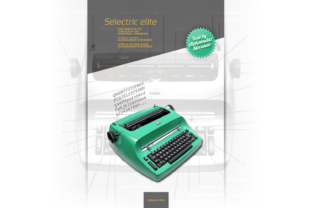
Selectric Elite
Selectric Elite is a bold slab serif typeface designed to evoke the mechanical precision and tactile character of vintage typewriters—specifically the IBM Selectric series introduced in the 1960s. Unlike digital recreations that prioritize nostalgia over function, Selectric Elite balances authentic typewriter aesthetics with modern typographic standards: consistent spacing, clear letterforms, and robust OpenType support. It is not a scanned or traced bitmap font, but a carefully drawn interpretation optimized for both screen and print use.
Why Designers Consider Selectric Elite
Designers often seek Selectric Elite when they need a typeface that conveys authority, craftsmanship, or historical resonance without veering into kitsch. Its slab serifs are uniform and substantial, its stroke contrast moderate, and its terminals slightly rounded—traits that echo the physical limitations and visual language of electromechanical typing. This makes it especially relevant for projects where tone and context matter as much as legibility: editorial features on mid-century design, branding for artisanal goods, exhibition typography, or packaging that leans into analog authenticity.
Interest in Selectric Elite typically arises from one or more of these practical needs:
- A desire for typographic distinction in environments saturated with geometric sans-serifs or minimalist fonts;
- The need to reinforce a narrative tied to tradition, reliability, or hands-on creation;
- Compatibility requirements for both headings and short blocks of body text (e.g., posters, labels, or title cards);
- Technical constraints requiring a monospaced-adjacent rhythm without sacrificing proportional refinement.
Benefits and Realistic Expectations
Selectric Elite excels in controlled, intentional applications. Its strong vertical stress and generous x-height ensure impact at larger sizes, while its even weight distribution supports readability in short-form contexts like signage, album art, or logo lockups. The font includes standard ligatures, small caps, and stylistic alternates—such as a double-story a or bracketed serifs—that allow subtle customization without switching families.
However, expectations should be calibrated. Selectric Elite is not intended for long-form reading. Its deliberate typewriter DNA means tighter counters and less open apertures than contemporary text faces—traits that aid character recognition on paper but can reduce flow in extended paragraphs. Line spacing and tracking require attention; default settings may feel cramped, particularly in digital interfaces. Also, while it supports Latin-based languages comprehensively, extended Cyrillic, Greek, or Vietnamese coverage is limited or absent in most releases.
Situations Where Selectric Elite Is a Strong Fit
Selectric Elite performs best when used with restraint and purpose. It is well-suited for:
- Branding systems where heritage or material honesty is central—e.g., a letterpress studio, a craft distillery, or an archive-focused publication;
- Editorial headlines and pull quotes, especially alongside neutral text fonts (like Merriweather or Source Serif) that provide contrast without competing;
- Print collateral with tactile emphasis, such as business cards on textured stock or exhibition wall text printed via offset;
- UI elements with high visual hierarchy, like dashboard headers or app onboarding screens where brevity and clarity outweigh continuous reading demands.
In each case, the value lies not in ubiquity, but in alignment: Selectric Elite reinforces meaning through form. Its effectiveness grows when paired with supporting design choices—consistent spacing, restrained color palettes, and intentional whitespace—that honor its mechanical roots without mimicking them literally.
When Alternatives May Be More Appropriate
Selectric Elite is not a universal solution. Consider alternatives if your project requires:
- Extended body text: Fonts like IBM Plex Serif or Source Serif Pro offer typewriter-informed structure with superior readability at small sizes and longer line lengths.
- True monospacing: If code display, terminal interfaces, or strict grid alignment are priorities, dedicated monospaced fonts like Fira Code or IBM Plex Mono provide predictable character widths and developer-friendly features.
- Broad language support: For multilingual publishing or global-facing interfaces, open-source families such as Noto Serif deliver extensive script coverage without compromising typographic quality.
- Variable font capabilities: Projects needing responsive weight or width control benefit from variable fonts like Inter or Roboto Flex, which offer fine-grained adjustment unavailable in static releases of Selectric Elite.
Making a Practical Decision
Evaluating Selectric Elite begins with clarifying intent. Ask: Is the goal to signal a specific era or ethos—or simply to add visual interest? If the former, test how the font behaves in your actual layout: set sample headlines next to your chosen body text, check rendering across devices, and verify licensing terms for your use case (e.g., web embedding vs. desktop-only use). If the latter, consider whether a lighter-weight slab serif—or even a well-chosen sans-serif with subtle typewriter-inspired details—might achieve similar distinction with greater flexibility.
Also weigh production realities. Does your team have experience adjusting tracking and line height for dense serif faces? Will developers need to load additional font files for web use? Are print vendors familiar with its metrics, or will output require manual kerning adjustments? These aren’t barriers—but they’re factors that influence whether Selectric Elite enhances workflow or complicates it.
Finally, compare it against your existing type system. A strong pairing often matters more than a single standout face. Selectric Elite gains strength when it complements—not competes with—other fonts in your kit. If your current heading font already carries strong personality, introducing another highly distinctive face may dilute hierarchy rather than reinforce it.
In summary, Selectric Elite serves a precise niche: designers who need a bold, slab serif with verifiable typewriter lineage and the technical foundation to integrate cleanly into modern workflows. It rewards thoughtful application and underlines intentionality—but only when that intention aligns with its structural and expressive boundaries.