Rain Lily: A Friendly, Versatile Hand-Lettered Font for Everyday Design
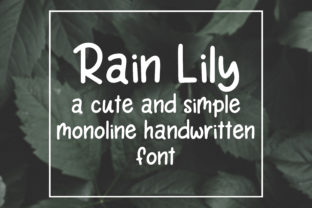
When you’re choosing a font for a project—whether it’s a wedding invitation, a small business logo, a social media graphic, or even a classroom handout—you’re not just picking letters. You’re selecting tone, personality, and clarity. Rain Lily is a hand-lettered sans-serif font designed with intention: it’s monoline (meaning every stroke has consistent weight), gently rounded, and intentionally uncluttered. Its charm lies in its simplicity—not minimalism for its own sake, but simplicity that invites readability and warmth.
Unlike many display fonts that demand attention through dramatic contrast or exaggerated flourishes, Rain Lily offers quiet confidence. It’s the kind of typeface that works as well on a tiny Instagram story as it does on a 24-inch canvas print. And because it’s hand-lettered—not algorithmically generated—it carries subtle human rhythm: slight variations in curve tension, soft entry/exit points, and balanced spacing that feels intuitive rather than mechanical.
Why Designers (and Non-Designers) Reach for Rain Lily
Many people don’t set out to find a font—they set out to solve a problem. Maybe you’re launching a new Etsy shop and need packaging labels that feel personal but still professional. Or you’re a teacher creating weekly learning posters and want something legible at a glance yet visually inviting. Perhaps you're planning a baby shower and want printable signs that feel tender without veering into cutesy overload. In each case, the challenge isn’t about “finding a pretty font”—it’s about finding one that supports your message without competing with it.
Rain Lily meets those needs by striking a rare balance: it’s friendly enough for heartfelt moments, clean enough for modern branding, and flexible enough to scale across formats. Its monoline structure ensures crisp rendering at any size—even on low-resolution screens or printed materials using basic inkjet printers. That reliability matters when you’re working solo, under deadline, or without access to professional design tools.
Real-World Uses—and Why They Work
Here’s where Rain Lily shines most meaningfully:
- Small business branding: Cafés, boutiques, and wellness studios often seek fonts that reflect care and authenticity. Rain Lily’s gentle curves and open letterforms convey approachability—ideal for storefront signage, menu boards, or product tags where warmth builds connection.
- Educational and community materials: Teachers, librarians, and nonprofit organizers use Rain Lily for flyers, classroom charts, and event announcements. Its high x-height and generous counters (the enclosed spaces inside letters like ‘a’ or ‘e’) improve legibility for younger readers and neurodiverse audiences alike.
- Personal creative projects: Journaling, scrapbooking, or DIY greeting cards benefit from Rain Lily’s hand-crafted nuance. It adds subtle artistry without requiring illustration skills—making thoughtful design accessible to anyone with a design app or even basic word processing software.
- Digital content: Blog headers, email newsletter banners, and Canva-based social graphics gain cohesion with Rain Lily. Its consistent stroke weight prevents visual “flicker” on screen, and its neutral-but-charming tone avoids dating quickly—unlike trend-driven fonts that feel outdated within months.
How Different Users Get the Most From Rain Lily
Not everyone uses fonts the same way—and that’s okay. Here’s how Rain Lily adapts thoughtfully to different workflows and skill levels:
- Beginners: If you’re new to typography, start with Rain Lily as your go-to “safe but expressive” option. Use it in title-case headings paired with a clean, highly readable body font like Open Sans or Inter. Avoid over-styling—let Rain Lily’s natural rhythm speak for itself.
- Small business owners: Prioritize consistency. Apply Rain Lily to your logo lockup, website hero text, and printed receipts—but keep body copy in a more functional font. This creates hierarchy without sacrificing professionalism.
- Teachers and volunteers: Leverage Rain Lily’s legibility in multilingual settings. Its straightforward shapes translate clearly across languages that share the Latin alphabet, supporting inclusive communication in diverse classrooms or community centers.
- Design professionals: Use Rain Lily as a strategic contrast tool. Pair it with geometric sans-serifs (like Montserrat) or warm serifs (like Lora) to create intentional visual tension. Its hand-lettered origin makes it especially effective in brand systems seeking humanity amid digital uniformity.
Practical Tips Before You Download or License
Before adding Rain Lily to your toolkit, consider these real-world factors:
- Licensing clarity: Check whether your intended use—especially commercial applications like client work or product packaging—requires an extended license. Many foundries offer clear, tiered options; look for ones that include web font hosting, desktop use, and unlimited projects.
- File format compatibility: Rain Lily is typically available in OTF and WOFF2 formats. If you're using Canva, Adobe Express, or Figma, confirm it supports custom font uploads—or look for platforms that have pre-integrated Rain Lily via their font libraries.
- Pairing wisely: While Rain Lily stands confidently alone, it pairs beautifully with fonts that offer structural contrast. Try it with a sturdy, low-contrast sans-serif for body text (e.g., Poppins or Nunito) or a modest serif for editorial layouts (e.g., Merriweather). Avoid pairing it with other hand-lettered or script fonts—that can dilute its impact.
- Accessibility note: Though highly legible, Rain Lily is best used for headings and short-form text. For long paragraphs or legal disclaimers, always switch to a WCAG-compliant body font with strong contrast and clear character distinction.
A Font That Grows With Your Needs
What makes Rain Lily enduring isn’t just its aesthetic—it’s its adaptability. It doesn’t shout. It doesn’t distract. Instead, it listens—to your audience, your medium, and your intention—and responds with quiet clarity. Whether you're designing your first logo or your hundredth workshop handout, Rain Lily supports your voice rather than replacing it.
In a world saturated with flashy, algorithm-optimized visuals, choosing a hand-lettered font like Rain Lily is a small but meaningful act of intentionality. It says: I value connection over clutter. I choose warmth without whimsy. I want my words to be seen—and felt.
If you’ve been searching for a font that bridges creativity and practicality, that serves both heart and function, Rain Lily is more than a design choice. It’s a reliable partner—one that grows quieter, clearer, and more useful the more you use it.