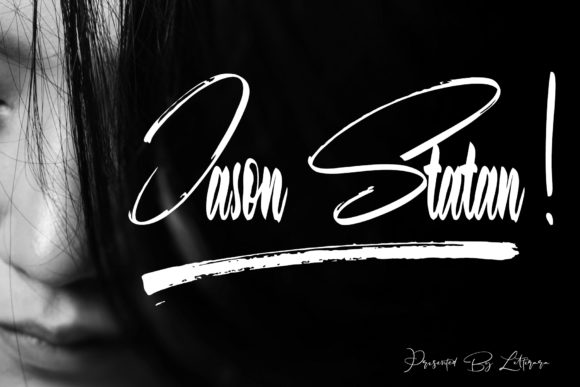
Jason Statan: Bold Handwritten Font with Urban Edge
When your design needs personality—not polish—Jason Statan steps in. It’s not another delicate script or safe sans-serif. It’s a fun and bold handwritten font with an urban twist: energetic, slightly imperfect, and unmistakably human. Think chalkboard art in a Brooklyn café, street-art lettering on a brick wall, or the confident scrawl of a creative entrepreneur sketching ideas on a napkin. That’s the spirit Jason Statan captures—and it does so without sacrificing readability or versatility.
Why Handwritten Fonts Still Matter in a Digital World
In an age of AI-generated visuals and algorithm-driven layouts, authenticity stands out. Readers subconsciously trust voices that feel personal and intentional. A well-chosen handwritten font like Jason Statan signals approachability, creativity, and confidence—not carelessness. Unlike overly ornate scripts that blur at small sizes or rigid display fonts that feel cold, Jason Statan balances character with clarity. Its thick strokes, subtle bounce, and uneven baseline give it rhythm without compromising legibility—even at 16px on screen or in tight social media thumbnails.
Where Jason Statan Delivers Real Design Value
Jason Statan shines where tone and identity intersect. Consider these everyday scenarios:
- Small business branding: A local bakery launching Instagram ads uses Jason Statan for its “Fresh Daily” tagline. The font reinforces warmth and craftsmanship—no stock imagery or generic fonts needed. Customers respond to the tactile, handmade vibe, which aligns with their values.
- Educational content: An online course creator designing a downloadable workbook swaps a standard heading font for Jason Statan. Learners report the material feels more engaging and less intimidating—especially for visual or kinesthetic learners who associate handwriting with active thinking.
- Event promotion: A community music festival uses Jason Statan across posters, tickets, and email headers. Its urban energy mirrors the event’s ethos—eclectic, inclusive, grounded—without needing extra graphic elements to “explain” the mood.
What makes this work isn’t novelty—it’s intentionality. Jason Statan doesn’t distract; it directs attention and reinforces message. You’re not choosing a font just to be different—you’re selecting a tool that supports your communication goal.
Who Benefits Most—and Why
Professionals who rely on visual differentiation often gain the most from Jason Statan: freelancers pitching to creative clients, educators building student-facing materials, bloggers curating distinctive newsletters, and small business owners managing their own marketing. These users rarely have dedicated design teams, so every asset must pull double duty—communicating clearly *and* reinforcing brand voice.
Take a freelance illustrator launching a new workshop series. Using Jason Statan for the title “Draw Your Way In” instantly conveys playfulness and invitation—key emotional cues for hesitant beginners. That same font would feel misplaced in a corporate annual report or a medical device manual, and that’s by design. Jason Statan excels where humanity matters more than formality.
Practical Tips for Using Jason Statan Well
Like any expressive typeface, Jason Statan works best when paired thoughtfully:
- Pair it with a clean, neutral companion. Try it with a relaxed sans-serif like Inter, Lato, or Open Sans—not a competing script. Let Jason Statan handle headlines, quotes, or callouts while your body text stays highly readable.
- Reserve it for impact—not volume. Use it for short phrases (under 5 words), logos, section dividers, or button labels. Avoid long paragraphs or dense captions—it’s designed to catch the eye, not sustain reading.
- Test contrast and size early. Its bold weight demands strong background contrast. On light backgrounds, use true black or deep charcoal—not gray. On dark backgrounds, opt for crisp white or off-white. At smaller sizes (under 24px), simplify usage to single words or initials.
- Consider context before committing. If your audience skews formal (e.g., legal services, financial advising), Jason Statan may clash with expectations—even if beautifully rendered. Ask: Does this support trust, or risk undermining it?
Realistic Fit Considerations
No font solves every problem—and Jason Statan is no exception. It’s not ideal for multilingual projects requiring extensive diacritics or non-Latin scripts (it supports basic Latin characters and common punctuation, but not extended Cyrillic or Asian language sets). It also lacks optical sizing variants, so fine-tuning for print vs. web requires manual adjustments.
And while its urban charm resonates widely, it’s not universally appropriate. A nonprofit focused on crisis response might prioritize calm authority over energetic flair—making Jason Statan better suited for their youth outreach campaign than their donor appeal. Context shapes suitability. That’s why thoughtful designers don’t ask, “Is this font cool?” They ask, “Does this font serve the person reading it—and the purpose behind the message?”
More Than a Font—A Communication Choice
Choosing Jason Statan isn’t about chasing trends. It’s about recognizing that typography is part of your voice. When you select it for a podcast logo, a workshop handout, or a product label, you’re signaling something specific: creativity with confidence, craft without pretense, energy with intention.
That’s why designers return to it—not for novelty, but reliability. It performs consistently across platforms: renders cleanly in Figma and Adobe apps, converts well in HTML/CSS (via @font-face or variable font services), and scales gracefully in responsive layouts. No hidden quirks, no rendering surprises—just dependable character.
For creators balancing speed and sincerity, Jason Statan reduces friction. Instead of spending hours tweaking kerning or layering effects to simulate “handmade,” you get authentic texture baked in. That saved time adds up—whether you’re updating ten social posts a week or designing a full brand system in two weeks.
Final Thought: Let Personality Lead
Great design doesn’t shout. It connects. And sometimes, the most effective connection starts with a single, well-chosen word in Jason Statan: warm, bold, human—and unmistakably yours.